2027 Projections: Sustainable Sourcing in Bali’s Luxury Import Sector
Updated: July 2026
2027 Projections: Sustainable Sourcing in Bali's Luxury Import Sector
By 2027, sustainable sourcing will be a critical differentiator within Bali’s luxury import sector, driven by heightened consumer demand for ethical practices and environmental responsibility. This shift mandates stringent supply chain transparency and verifiable certifications for materials and labour, moving beyond mere aesthetic appeal to encompass the provenance and ecological impact of imported luxury goods.
Bali’s luxury import market, while not explicitly tracked under a singular ‘baliluxuryimport’ entity, operates within the broader context of Indonesia’s luxury sector and Bali’s dynamic real estate landscape. The luxury market in Indonesia is experiencing robust growth, propelled by increasing disposable incomes and a discerning clientele. This clientele, particularly by 2027, will prioritise sustainability, demanding that luxury items, from bespoke furnishings to high-end textiles, adhere to verifiable ethical and environmental standards throughout their production and import journey.
The absence of specific data for ‘baliluxuryimport’ necessitates an analysis based on the broader luxury and real estate trends impacting the island. The median sold price for properties across Bali is projected at approximately $299,000 by 2026, indicating a robust real estate market that often correlates with demand for luxury goods to furnish and adorn these properties. Luxury villas, such as 3-bedroom properties in Canggu valued at $840,000 or architect-designed sea-view villas reaching $3,000,000, underscore a clientele with significant purchasing power and an increasing awareness of global ethical consumption trends.
The Imperative of Verifiable Sustainability by 2027
As we approach 2027, the luxury import sector in Bali will face intensified scrutiny regarding its environmental footprint and social responsibility. Consumers will no longer be satisfied with vague claims of sustainability; they will demand demonstrable proof. This includes certifications for responsibly harvested timber, ethically sourced minerals, and textiles produced under fair labour conditions. Importers failing to adapt will likely see a decline in market share, as reputational damage in the luxury segment can be swift and severe.
The drive for sustainability extends to packaging and logistics. By 2027, luxury imports arriving in Bali will increasingly utilise biodegradable packaging materials and carbon-neutral shipping methods. This comprehensive approach to sustainability, from origin to final delivery, will become a benchmark for excellence in the sector. Furthermore, the integration of blockchain technology for supply chain transparency, allowing consumers to trace the journey of their luxury items, will gain traction.
Impact on Sourcing Strategies
The shift towards verifiable sustainability will profoundly influence sourcing strategies. Importers will be compelled to forge stronger, more direct relationships with producers to ensure compliance with ethical and environmental standards. This may involve investing in supplier development programmes, providing training on sustainable practices, and conducting regular audits. The emphasis will move away from solely cost-driven sourcing towards value-driven procurement that factors in long-term environmental and social impacts.
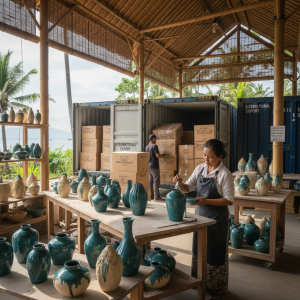
For instance, an importer of high-end Balinese furniture might collaborate directly with local artisan communities, ensuring fair wages, safe working conditions, and the use of sustainably harvested local timbers. This contrasts with previous models that might have prioritised mass-produced items with less transparent origins. The 10-15% rental yields typically seen in Bali’s property market suggest a consistent demand for well-appointed properties, creating a stable market for responsibly sourced luxury furnishings.
Logistics and Ethical Transport Considerations
The movement of luxury goods into Bali, particularly large or delicate items, requires meticulous planning. By 2027, the ethical considerations will extend to the transport networks themselves. Importers will favour logistics partners who demonstrate a commitment to reducing their carbon emissions and adhering to international labour standards. This could mean opting for sea freight over air freight where feasible, and selecting carriers with modern, fuel-efficient fleets.
Considering the high value of these imports, secure and professional handling is paramount. For those island’s infrastructure post-import, engaging reliable services is essential. For instance, ensuring a smooth and luxurious experience for clients or for personal high-end transport needs, utilising a reputable bali luxury transfer service becomes an integral part of maintaining the high standards associated with luxury. This holistic view of luxury, encompassing both the product and its journey, will define the market in 2027.
Certification and Consumer Trust
In 2027, industry-recognised certifications will be indispensable for building consumer trust. Labels such as FSC for timber, Fair Trade for textiles, and GIA for gemstones will provide tangible proof of sustainable and ethical practices. Importers will actively seek out products bearing these certifications and will prominently display them in their marketing materials. The luxury sector thrives on reputation, and by 2027, a strong commitment to verifiable sustainability will be a cornerstone of that reputation.
- Increased demand for certified sustainable materials (FSC, Fair Trade, Organic).
- Greater transparency in supply chains, potentially utilising blockchain technology.
- Emphasis on ethical labour practices and fair wages for producers.
- Preference for eco-friendly packaging and carbon-neutral shipping.
- Investment in long-term supplier relationships focused on sustainable development.
Market Adaptation and Innovation
The luxury import sector in Bali will see significant innovation in response to these sustainability demands. This includes the development of new, sustainable materials that mimic the aesthetic and tactile qualities of traditional luxury materials, but with a reduced environmental impact. For example, plant-based leathers or recycled precious metals will become more commonplace in high-end imported goods.
Furthermore, businesses will explore circular economy models, where luxury items are designed for longevity, repair, and eventual recycling. This contrasts with a linear ‘take-make-dispose’ model, reflecting a deeper commitment to environmental stewardship. The increasing value of land in areas like Canggu, where freehold land prices have risen to $100,000 per are, underscores the broader economic context supporting these high-value, high-integrity imports.
Table: Key Sustainability Pillars for Bali Luxury Imports (2027)
| Pillar | Description | Expected Impact on Imports |
|---|---|---|
| Material Sourcing | Prioritisation of renewable, recycled, or ethically harvested raw materials. | Increased demand for certified timber, organic textiles, recycled metals. |
| Ethical Labour | Ensuring fair wages, safe working conditions, and no child labour throughout the supply chain. | Stronger supplier audits, partnerships with Fair Trade organisations. |
| Environmental Impact | Minimising carbon footprint, waste reduction, and pollution control. | Preference for low-emission transport, biodegradable packaging, energy-efficient production. |
| Transparency & Traceability | Providing clear, verifiable information about product origin and journey. | Adoption of blockchain, comprehensive product passports, third-party certifications. |
| Circular Economy | Designing products for durability, repair, and recyclability. | Focus on long-lasting, repairable items; potential for take-back programmes. |
What defines sustainable luxury imports in Bali by 2027?
By 2027, sustainable luxury imports in Bali will be defined by comprehensive adherence to ethical and environmental standards across the entire supply chain. This includes verifiable certifications for materials (e.g., FSC timber, organic cotton), ethical labour practices (fair wages, safe conditions), reduced environmental impact during production and transport (carbon-neutral shipping, biodegradable packaging), and full transparency regarding product origin and journey, often facilitated by technologies like blockchain. The emphasis will be on demonstrable proof of sustainability rather than merely aspirational claims.
How will consumer demand for sustainability impact pricing and market access for luxury imports in Bali?
Consumer demand for sustainability in Bali’s luxury import market by 2027 will likely lead to a premium on genuinely sustainable products, reflecting the higher costs associated with ethical sourcing, certifications, and greener logistics. While entry-level luxury items might see minor increases, bespoke or high-end luxury items with verifiable sustainability credentials will command higher prices. Market access will become increasingly challenging for importers who cannot prove their sustainability claims, as discerning consumers and regulatory pressures will favour businesses with transparent, ethical, and environmentally responsible supply chains. This will necessitate significant adaptation and investment from importers to remain competitive and relevant.
Related reading